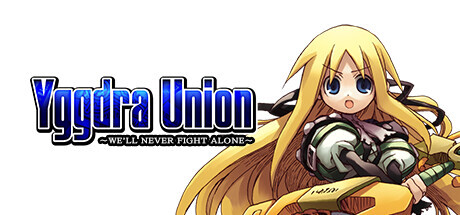
Yggdra Union Image
Metascore

Generally favorable reviews - based on 8 Critics What's this?

  • Summary: Ruled by a royal family said to be descendants of the gods themselves, Fantasinia is a prosperous and peaceful land -- until the peace is shattered by the invading forces of the Empire of Bronkia. Led by the young emperor Gulcasa, who seized control of the Empire in a brutal coup d?etat, Bronchia's Imperial Army cuts a bloody swath through the people of Fantasinia and the Royal Armies of King Ordeene. Amidst the chaos, a young woman escapes from the besieged capital of Partina -- a woman with innocence in her face, and a sword in her hand. The girl?s name is Princess Yggdra, the last surviving member of the royal family; the sword is the Gran Centurio, a legendary blade once wielded by the founder of Fantasinia, and passed down through generations of royalty. Fleeing to to a remote valley at the southern tip of the continent, Yggdra meets up with Milanor, the charismatic leader of a band of thieves, and readies herself for a war of liberation. Expand
Score distribution:
  1. Positive: 6 out of 8
  2. Negative: 0 out of 8
  1. It's no easy feat to invigorate a genre that has remained fairly set in its ways for the last few generations, let alone do it with the imagination and energy present here.
  2. 85
    At this point, I don't think it's reasonable to recommend playing this particular version of the game, unless you absolutely loathe voice acting (and/or refined graphics, and/or the PSP as a platform).
  3. The best strategy games are able to transform you into a tactical powerhouse as you maneuver your units to victory. Yggdra Union manages to tap into this feeling occasionally with some innovative strategy mechanics, but more often it made me feel like a spectator rather than a commander.

See all 8 Critic Reviews

Score distribution:
  1. Positive: 1 out of 1
  2. Mixed: 0 out of 1
  3. Negative: 0 out of 1
  1. XandK.
    9
    Highly entertaining, amazingly complex and oh-so FUN. If you buy it used or run a ROM, make SURE to get the Instruction book somewhere. The game is very, very complex. But that's where it shines. Battle animations are beautiful, and control over trooops is deeper than most SRPGs. Expand
    • 0 of 0 users said yes
  2. Yggdra Union is an awesome strategy game, but it is also unapproachable to casual players. The Good: Superb graphics and characters design; innovative gameplay system (cards, morale, union/link, offense/defense bar); very-long-lasting adventure The Bad: Complex strategy is not well explained in the tutorials; lack of pattern in the buttons mapping; difficulty crosses the line of frustration When Atlus started developing games for Nintendo in the NES era it was all about traditional genres–mostly platformers and sports games. But things got really serious when they received the rights to get along with the spectacular SNES’ Ogre Battle (an Enix’s game before its fusion with Square) and released their own chapter for the N64; several changes were made in the series and reactions were somewhere between love and hate, but the fact is Atlus turned itself into a reference when talking about strategy games. And this Yggdra Union is a good example of the Atlus way of making it, for the good and for the bad. The RPG portion of the game–which consists in visiting towns, adding characters to the group and following the dialogues/story line–is fairly traditional. Twists and turns in the story are great, but sometimes you’ll want to cry after defeating the same bad guy for the 5th time and seeing him/her running away again; dialogues are nice too, but there’s not much room for making different choices to open a new way; in short, there’s no innovation here–innovation lies precisely in the strategy portion of the game, which is the main value within Atlus’ projects. The concepts behind the strategy system are both innovative and interesting. Each character leads one unit (with 3 or 6 warriors, depending on its size), which fights an enemy unit until the number of fighters in one of them fall to zero; when that happens the defeated unit don’t lose HP or fighters for the next battle, but it loses morale–the real sign of a battle losing. That means: no morale, no unit at all. At first sight this ‘morale’ stuff feels like the same thing in different colors, but it brings one important difference: a unit is not weaker than other just because of its low morale level. Even if a unit has only 1 morale point remaining it can win battles, on contrary of what would happen in some Advance Wars, for instance. Another very interesting concept is the usage of cards to move units. These cards have properties that rule the movement in the game, but they also rule the power of an attack and what kind of special strike can be used by a specific unit. That’s because the cards have magic powers that can be used in certain situations, like Milanor using the ‘Steal’ card to take someone’s item, or the ‘Chariot’ card that gives the Knights a chance to trample the opponent and make their numbers equal to yours. That leads us to another good idea that enhances the gameplay: a ‘passive/aggressive’ bar. The units fight automatically, but you can push them to ‘aggressive’ (raising your attack stats) or hold them back to ‘passive’ (raising your special bar and enabling you to use the card’s special move), bringing up a wide combination of possibilities. Add to all that the ability to make unions and links in the battlefield with many units at the same time, variation with terrain type and an in-game clock (noon, evening and night times) and you get an almost infinite variety regarding tactics. The big deal here is all this innovation and complexity in the game strategy, but it’s also what keeps casual players away from it. The game is very complicated and sometimes tutorials spend precious time explaining the obvious and not talking about important things; the levels become so hard as you advance that you may need to restart one of them just because you’ve been hit with a ‘critical’ once, and many of these levels have sub-stages where you’re not allowed to save your progress; using items is critical to restore the troops morale, but they are rare and can’t be purchased; besides the lack of a pattern in the controls, making the player lose time looking for a screen. Graphics and sound both make a good presentation. The characters design has a lot of personality to it and backgrounds in the battle screen are beautiful (including color changes according to the hour of the day); music is not that remarkable, but it has the value of not getting boring after hours of play, and SFX/voice acting work great. Last thing to talk about: the content. We have nothing to complain about here, since the game lasts dozens of hours even without some multiplayer option. And it opens extra content according to your performance. In the end Yggdra Union is a great strategy game, it has a strong personality, but its good taste is a prize only for those dedicated players who struggle themselves to understand it. Unfortunately, it’s not for everyone. Expand
    • 0 of 0 users said yes