X
- The Chinese Room
- The Chinese Room
- The Chinese Room
- The Chinese Room
Dear Esther
Released On: Apr 26, 2012
75
6.5
Metascore
Generally Favorable
Based on 37 Critic Reviews
75
78% Positive
29 Reviews
29 Reviews
14% Mixed
5 Reviews
5 Reviews
8% Negative
3 Reviews
3 Reviews
Metascore
Generally Favorable
Based on 37 Critic Reviews
75
78% Positive
29 Reviews
29 Reviews
14% Mixed
5 Reviews
5 Reviews
8% Negative
3 Reviews
3 Reviews
Dear Esther is an auditory and visual experience that interweaves a consuming narrative and array of emotions. The game's actual value must not be solely based upon its gameplay length, but rather on the random elements and new secrets discovered through multiple playthroughs. Those that brave the journey into the narrative and world of Dear Esther will discover an experience that few games have been available to accomplish in years. Highly recommended.
Mysterious, poetical and full of atmosphere – Dear Esther is as magical as a short story from Ray Bradbury. The creative way of storytelling fascinated me from the very first moment.
User Score
Mixed or Average
Based on 749 User Ratings
6.5
50% Positive
371 Ratings
371 Ratings
25% Mixed
189 Ratings
189 Ratings
25% Negative
189 Ratings
189 Ratings
User Score
Mixed or Average
Based on 749 User Ratings
6.5
50% Positive
371 Ratings
371 Ratings
25% Mixed
189 Ratings
189 Ratings
25% Negative
189 Ratings
189 Ratings
Yes, in this game you will only have the controls of walking. However, it is much more about the experience. Controls should not dictate whether a game has an amazing story or not. Dear Esther's poetic story had me in tears by the end, because it gave me a better story than any other game has ever produced for me, ever. I played Everybody's Gone to The Rapture, Gone Home, and you can even include more popular AAA games like The Last of Us, the Half-Life series, whatever you want to name: no game has produced the emotions this game did. And it's not all very clear, a lot of that emotion isn't necessarily about the game, but it's also just thinking about your life, and the people around you.
So yes, the input you have is where to walk. But the power you have is to look, see, hear, and experience what you do in this game. If you want something concise but powerful, only a few movies carry the emotional impact of Dear Esther.
Report
PC
It's certainly not a title for those who prefer more traditional video games. Instead it's more an interactive exhibit, rewarding you for attentive observation and approaching its unique make-up with an open mind. Do so and you will find a haunting, thought-provoking piece of work.
If you're into the idea of experimental "games" pushing the boundaries of the medium, you might like Dear Esther, but if you're looking for a detailed story of Event A causing Event B which then naturally led to Event C, then this is not for you.
Dear Esther is that rarest of things: a truly interesting game. It left me feeling pensive, mildly saddened, and confident that games have plenty of directions left to explore. If you're interested in what can be achieved when you abandon the conventions of games and explore the fringes of the form instead, it's a must-play.
There is certainly a place for more interactive titles such as Dear Esther when cleverly executed; one great example was the Super 8 interactive teaser included with Portal 2, offering a short but intriguing teaser that promoted the movie in a way that had previously never been attempted. As a standalone title that sells for the same price as other games that provide ambiance without skimping on gameplay, it's a much tougher sell. Still, it's a sell that anyone looking for a potentially soul-lifting experience should consider making.
With no story or true narrative to latch onto, there's no reason for players to care about what's going on. And there's only one thing ever going on in Dear Esther: nothing. Broken up into individual pieces-the graphics, writing, and music clearly show talent and might have led to interesting stories or games-but together they form a dull, lifeless experience that's quickly forgotten.
Dear Esther is a living metaphor. A man lost within his own world, represented as an abandoned island. As he walks, he studies the traces of his own past, in search for hope. All you do in this game is walking and listening to the narrator. But if you let yourself be taken by the narrative, the experience can be amazing. This game is really special to me, because it helped me think about my own situation of loss and confusion. Thank you for this wonderful game.
Report
PC
Визуальный стиль, внешняя проработка окружения и множество остальных деталей дарят ту самую атмосферу вечерней прогулки с видом на невероятные красоты. Есть так же кое какие вкрапление сюжета, дающие уже самому игроку право на интерпретацию, но можно сказать, что его просто нет.
Ради красот и просто расслабляющего опыта проект можно попробовать.
Только жаль, что очень коротко.
7/10
Report
PC
I don't think this should be referenced as game. I was able to finish it only forcing myself, because I got bored and the game is just hour long or so, therefore I cannot go over 4. On the other hand technically there is nothing wrong with it. It look nice, aesthetically and it have technical quality of graphic on good level. The landscape is very good and believable and I think even big sandbox games could take few notes here. The story is good it presented too slow and so deep as presented.
Obviously from the other reviews there is lot of people that like this kind of simulation (i won't use the word game). So if incline to stuff like this then you do get it. If you never tried something like it, try it as it is super cheep. Other wise it would be rather waste of the time.
Report
PC
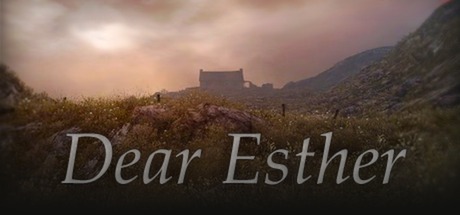
Summary Dear Esther is a first-person ghost story. Rather than traditional game-play the focus here is on exploration, uncovering the mystery of a lonely island, of who you are and why you are here. Fragments of story are randomly uncovered when exploring the various locations of the island, making every each journey a unique experience.
Platforms:
- PC
- iOS (iPhone/iPad)
Initial Release Date: Apr 26, 2012
Developer:
- The Chinese Room
Publisher: The Chinese Room
Genres: