Metascore

Generally favorable reviews - based on 20 Critics What's this?

User Score

Generally favorable reviews- based on 9 Ratings

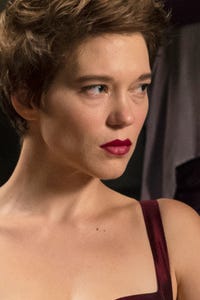
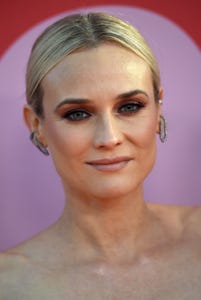
  • Summary: Based on the best-selling novel by Chantal Thomas, the film stars Léa Seydoux as one of Marie’s ladies-in-waiting, seemingly innocent but quietly working her way into her mistress’s special favors, until history tosses her fate onto a decidedly different path. With the action moving effortleortlessly from the gilded drawing rooms of the nobles to the back quarters of those who serve them, this is a period film at once accurate and sumptuous in its visual details and modern in its emotions. Diane Kruger gives her best performance to date as the ill-fated Queen and Virginie Ledoyen is the Queen’s special friend Gabrielle de Polignac. (Cohen Media Group) Expand
Score distribution:
  1. Positive: 11 out of 20
  2. Negative: 0 out of 20
  1. Reviewed by: Mick LaSalle
    Jul 12, 2012
    100
    Other films about Marie Antoinette have had their moments, but Benoît Jacquot's Farewell, My Queen is the first to give a real sense of what it must have felt like to live inside that palace as the walls were caving in.
  2. Reviewed by: Deborah Young
    Jul 10, 2012
    80
    Historical drama set in the early days of the French revolution is intelligent Euro eye candy at its most lavish.
  3. Reviewed by: Stephanie Zacharek
    Jul 12, 2012
    60
    The picture coasts along quite nicely on the strength of its contemplative sensuality, its macaron colors, and the exquisite beauty of its three chief actresses, Léa Seydoux, Virginie Ledoyen and Diane Kruger. Oh, and there's nudity in it too, not to mention lesbian undertones – or are they overtones?
  4. Reviewed by: Elizabeth Weitzman
    Jul 12, 2012
    60
    Whether accurate or not, it's certainly entertaining to watch regal intrigues through the eyes of lady-in-waiting Sidonie (Léa Seydoux). That Jacquot handles the action so lightly is a credit, considering that it takes place during some of the tensest moments of the French Revolution.

See all 20 Critic Reviews

Score distribution:
  1. Positive: 1 out of 3
  2. Negative: 0 out of 3
  1. If you are expecting a French film chronicling the last days of Marie Antoinette, then you may be in for a slight disappointment. Brilliantly directed by the Benoit Jacquot (who also co-wrote the much less impressive script) and starring Diane Kruger as Marie Antoinette and Lea Seydoux, who plays one of the Queen Expand
  2. The French Revolution kicked off in 1789, not too long after America's ended. Fortunately for King George III, he lived in London and not Philadelphia or Boston. King Louis XVI and his wife Marie Antoinette were not so lucky; their revolution sprouted on their doorstep. The four days which Farewell, My Queen covers, 14-17 July 1789, were dark days indeed for the French monarchy and their noble hangers-on. Nobody leaves Versailles because it is too dangerous, the Bastille is stormed, and there are pamphlets floating around Paris of 286 named individuals whose heads the revolutionaries wish to chop off. The number one name on that pamphlet is Marie Antoinette (Diane Kruger).

    Unlike Sophia Coppola's 2006 version of this story, Marie is not as young as she once was. She misses her youth but appears to have found company with the Duchess Gabrielle de Polignac (Virginie Ledoyen). Scandalous rumors circulate not only throughout the palace of the extent of their liaisons, but also through the rest of France. Many believe the Duchess is just as responsible for the people's miserable state of affairs as are the King and Queen. In fact, her name is number three on the guillotine wishlist. However, both of these ladies are merely supporting characters in Benoit Jacqot's version; their story is told through the eyes and ears of the queen's loyal reader, Sidonie Laborde (Lea Seydoux). Sidonie is at the queen's beck and call whenever she feels in the mood for a play or a novel to be read to her. She does not have a more devoted subject; Sidonie absolutely worships the queen is all she does or could do. The queen recognizes the true adoration in Sidonie's eyes and so employs her as a sort of sounding board and confidant; not to the extent of Duchess de Polignac's level of intimacy, but nonetheless, Sidonie is one of the closest servants to the queen. The other palace servants take note of this and Sidonie appears to be among the more higher-ranking servants. Even downstairs in the servant's quarters there is a caste system of hierarchy and rank. Because Sidonie is extremely well read and discreet on top of it, she is quite the capable spy who can ferret out closely held information when events start to pick up the pace outside the palace walls. Sidonie knows which servants to press for info, whose palms need greasing, and in which particular dark corner of the room to stand to eavesdrop on conversations to acquire the most up to date gossip on how the queen is feeling, who woke the King up in the middle of the night, and how close the revolutionaries are getting to the outside walls.

    Unfortunately, what sounds like deep palace intrigue and an interesting history lesson in the French Revolution mostly lands with a thud on screen. Marie Antoinette is seen a few times and the Duchess hardly at all. A movie which spends a lot of time discussing the truth and falsehoods of their relationship only puts them in the same room together once. Sidonie holds your interest as she scurries back and forth trying to please the queen but her limited view of the action also limits the audience's view. As the situation becomes more pressing and hectic, the camera almost latches on to the back of Sidonie's neck as she runs down the long, slick hallways of Versailles. Towards the end, the camera work was becoming a bit distracting. One should not notice the camera's movements too much but after another jerky movement to the right and back left or another awkward close-up, I wished they would just place the camera on a tripod and let it be. What the cinematographer may have thought was innovative and eye-catching was more irritating and a case of needless showboating.

    The art and costume directors must have had a field day though. Any film set in 1789 Versailles probably has these types of creative personnel lined up down the block raising their hands to get a shot at it. While Farewell, My Queen works on an aesthetic level to produce a great looking period piece (minus the camera), this film is only for the Francophile. Those who relish any story of Marie Antoinette will probably love this movie no matter what. There is a lot of name dropping and whoever remembers their pre-Napoleon French history class from college may smile and nod as name after name is casually mentioned in conversation. For those who are a bit more discerning in their historical fiction though, you will not take very much away from this film you do not already know. Go enjoy some French wine instead or pick up a copy of A Tale of Two Cities to quench your French Revolution itch.
    Expand
  3. After 3

Trailers