X
- 2006
- R
- Warner Bros.
- 2 h 21 m
- 2006
- R
- Warner Bros.
- 2 h 21 m
Summary In this companion piece to "Flags of Our Fathers," Clint Eastwood presents the untold story of the Japanese soldiers and their general who 61 years ago defended against the invading American forces on the island of Iwo Jima. (Warner Bros.)
Directed By: Clint Eastwood
- 2006
- R
- Warner Bros.
- 2 h 21 m
- 2006
- R
- Warner Bros.
- 2 h 21 m
Letters from Iwo Jima

8.2
Where to Watch
Summary In this companion piece to "Flags of Our Fathers," Clint Eastwood presents the untold story of the Japanese soldiers and their general who 61 years ago defended against the invading American forces on the island of Iwo Jima. (Warner Bros.)
Directed By: Clint Eastwood
Where to Watch
Top Cast


Metascore
Universal Acclaim
Based on 37 Critic Reviews
89
92% Positive
34 Reviews
34 Reviews
8% Mixed
3 Reviews
3 Reviews
0% Negative
0 Reviews
0 Reviews
Metascore
Universal Acclaim
Based on 37 Critic Reviews
89
92% Positive
34 Reviews
34 Reviews
8% Mixed
3 Reviews
3 Reviews
0% Negative
0 Reviews
0 Reviews
Overall, the effect is presumably what Eastwood wanted: we are present at a momentous event, not watching a movie.
Taken together, Eastwood's masterworks - two of the best films of 2006 - may be Hollywood's last word on World War II.
User Score
Universal Acclaim
Based on 206 User Ratings
8.2
88% Positive
182 Ratings
182 Ratings
9% Mixed
19 Ratings
19 Ratings
2% Negative
5 Ratings
5 Ratings
User Score
Universal Acclaim
Based on 206 User Ratings
8.2
88% Positive
182 Ratings
182 Ratings
9% Mixed
19 Ratings
19 Ratings
2% Negative
5 Ratings
5 Ratings
It starts out at a high level of drama—the glories and tragedies of war being inherently affecting—and simply keeps turning the screws tighter and tighter. We think we know the sad trajectory of these men, and yet at each turn, the film becomes more and more tragic. It’s an emotional steamroller, crushing you flat by the end with an onslaught of feeling.
Report
Outstanding WW2 drama about Iwo JIma in the point of view of defeated. Narrated solemnly, honestly and without prejudice. One of best jobs of Eastwood.
Report
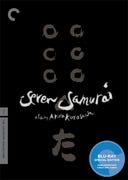
Eastwood's direction here is a thing of beauty, blending the ferocity of the classic films of Akira Kurosawa (Seven Samurai) with the delicacy and unblinking gaze of Yasujiro Ozu (Tokyo Story).
The special power of Eastwood's achievement is that, save for one indelible moment, the mutual recognition between sworn adversaries happens not on-screen, but later, as we piece the two films together in our minds.
This is sentimentality of the best kind, a touching display of male bonding amid terror and aching loneliness worthy of Howard Hawks at his finest.
Far superior to its companion piece, "Flags of Our Fathers," released earlier this year, "Letters" is a grim and humane film that has to be counted among the director's better efforts.
For once its good to hear about the enemy's side of the story. That they are not as evil as they were made out to be. Just a bunch of soldiers prepared to defend their homeland with no possibility of surrender. I have watched many war movies and I have to say this is in my top 3 favorite movies. The movie is a great war story and I always find myself wanting to watch this move over and over again.
Report
[SPOILER ALERT: This review contains spoilers.]
Report
If the world is at war then so is Eastwood, the experience shared isn't exactly observed in here.
Letters From Iwo Jima
Eastwood is a good pretender. Usually, he makes things look easy. And this time, the director, Clint Eastwood, may not have things served up front on the table. And even though he has to reach out for it, stretching his hand with enormous effort, he has still got that cowboy-ish smug on his face. As much as fascinating or innovative the idea is, the shift in perspective had to only make it familiar. And aware of this very fine window, Eastwood narrows down the behavior of these men calculatively similar; language changes but not the nature.
Jolting that very fear of being alone in a forsaken land along with fellow companionship who too are equally scared, his version of war may not be crowded or exhilarating as Steven Spielberg's in Saving Private Ryan, but it surely is an homage to those 50s The Bridge On The River Kwai- alike projects. Addition to it, it also has the vocab of that one man army script, as in, amidst all the broken political schemes applied left and right, it is inspiring to see this brutal battlefield, turn into mano-y-mano gritty action that is tailed with the obvious, survival spirit.
Personally, I feel there was a lot to accomplish in here, especially the aftermath of this heroic event. Yes, with an emotionally driven final act, it is quite a full stop Eastwood concludes on, but the film is more about the ongoing action rather than the consequences of it. Partly sinister and partly hopeful, he makes sure that you are at the brisk off your emotions when things break down to either side of the coin; and yes it mostly lands on the losing side, I mean it is about war, for not even the Letter From Iwo Jima could take that away and neither can Eastwood.
Report
They edited out the scene where Japanese soldiers ripped open pregnant women and tore their fetuses out from their wombs... And they forgot the scene where Japanese soldiers where Japanese soldiers **** ten year old girls to death and then stuffed bamboo poles up their ****...
Well, I suppose those women and girls are not important enough for this film...
This is the most morally reprehensible and disgusting film of all-time... It shamelessly warps historical truth. It attempts to portray the most brutal, sadistic, cruel, and inhuman monsters of all-time as tragic heroes who are somehow worthy of our sympathy and admiration...
As a sequel to this film, Mr. Eastwood ought to make a film that depicts how wonderful and nice **** SS soldiers are...
The only good part of this movie is where the stupid Japanese soldiers blew themselves up with grenades for their rat-faced devil coward emperor... That was a laugher lol... They died for nothing, they died for a diabolical regime of mass murder, **** and torture... And it is quite entertaining to know that they now burn in hell for their crimes...
Report
Production Company
Dreamworks Pictures,
Warner Bros.,
Malpaso Productions,
Amblin Entertainment
Release Date Dec 20, 2006
Duration 2 h 21 m
Rating R
Tagline The battle of Iwo Jima seen through the eyes of the Japanese soldiers.
Awards
Academy Awards, USA
• 1 Win & 4 Nominations
Golden Globes, USA
• 1 Win & 2 Nominations
Chicago Film Critics Association Awards
• 1 Win & 5 Nominations