SummaryThe film will be the eleventh title in the studio's hit Perry franchise. Perry will reprise his signature role as the straight-shooting Madea in the film, adapted from his new stage play "Madea's Happy Family," which is currently on tour in the U.S. Isaiah Mustafa the 'Old Spice Guy' plays Calvin, who is struggling with his marriage and ...
SummaryThe film will be the eleventh title in the studio's hit Perry franchise. Perry will reprise his signature role as the straight-shooting Madea in the film, adapted from his new stage play "Madea's Happy Family," which is currently on tour in the U.S. Isaiah Mustafa the 'Old Spice Guy' plays Calvin, who is struggling with his marriage and ...
The film is best appreciated as a showcase for the hugely popular titular character, with Perry tearing into the role with hugely entertaining comic gusto.
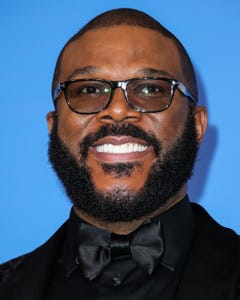
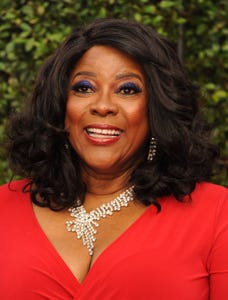
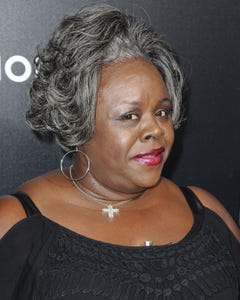
Shirley (Loretta Devine), Madea’s niece, goes to visit Dr. Evans (Philip Anthony-Rodriguez) with Aunt Bam (Cassi Davis) about her cancer and finds out that it has gotten worse, and that she may only have a few weeks to live. She asks Aunt Bam to call her children so she can invite them to dinner to tell them all at the same time. Cora and Mr. Brown (David and Tamela Mann) are also at the hospital, to get Mr. Brown a check-up. Dr. Evans tells them he has to do a colonoscopy on Mr. Brown, and they find a growth that needs to be removed surgically. Meanwhile, Madea (Tyler Perry) furiously and violently drives her car through a restaurant named 'Snax', because the manager had delayed taking her order until after the restaurant had stopped serving breakfast for the day due to being pre-occupied with a phone call, and had been very rude to Madea when she called the manager out on it.
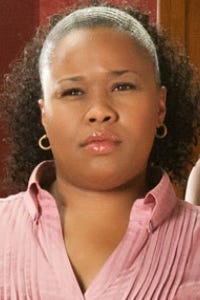
Shirley's children Byron (Shad "Bow Wow" Moss), Tammy (Natalie Desselle-Reid), and Kimberly (Shannon Kane) arrive at Shirley's house later that day for a dinner Shirley has planned for them in order to tell them the sad news about her recent prognosis. Byron arrives with his girlfriend Renee (Lauren London) and his baby Byron Jr. Tammy arrives with her husband Harold (Rodney Perry) and their two kids, with the former two subsequently carrying their argument over directions to the house with them. Kimberly arrives with her husband Calvin (Isaiah Mustafa). Tammy and Kimberly then start to argue when Byron's ex-girlfriend Sabrina (Teyana Taylor) and "baby mama" (Byron Jr.'s biological mother) arrives.
Sabrina quickly gets on Byron's nerves by addressing him as a "drug dealer" due him having been one in the past before being caught and incarcerated. She also lies excessively, uses her son's child support money and supplies for herself, and also tries to goad Byron back into selling drugs, so she can get more money for herself in the process. Moreover, she also turns out to be the manager of 'Smax', the restaurant that Madea crashed her car into earlier that day.
Bryon, Sabrina, and Kimberly then leave the dinner with their respective families due to the constant arguing and drama as well as their own reasons, and Shirley doesn't get the chance to tell the family about her cancer. During the night, Byron is arrested by the police for failing to pay child support. Shirley goes to Kimberly's house to ask her to bail him out, but Kimberly refuses. Calvin instead helps Shirley has to bail him out, much to Kimberly's anger and consternation.
The next day, Aunt Bam tells Madea about Shirley's cancer prognosis and the family's situation, to which Madea promises to gather all Shirley's children for another dinner that evening. She goes to Harold's auto repair garage where Tammy works with him and authoritatively demands her and Harold to go to the family dinner. After she does so, Tammy then gets called by a client, and Madea takes the opportunity to discipline Tammy's two unruly sons for their disrespect, putting fear into them. She then goes to Byron's workplace, but she finds him outside, since he was fired for being late as he spent the night in jail. It is revealed that the manager (played by Palmer Williams, Jr.) had fired Byron because him being late that day was his last strike. Madea then brusquely demands that he is at the family dinner as well and threatens him if he does not come. She proceeds to Kimberly, whom she finds her showing clients a new house, as it is revealed that she is a real estate agent, and she peremptorily yells at her to attend the dinner after Kimberly attempts to ignore her. Meanwhile, Mr. Brown loses a lot of blood during his surgery and the doctor asks Cora to donate some. When she does, she finds out that she doesn't have the same blood type as him, implying that he may not be her real, biological father.
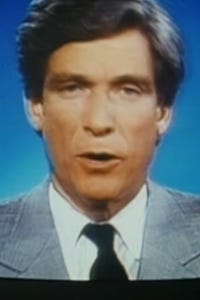
At dinner later on that night, Tammy and Kimberly have a vicious argument that leads to Tammy revealing that Kimberly had a child at 13 years old. Byron realizes that he is Kimberly’s son and storms out of the house, angry that this secret was kept from him. Later that night, for the first time at Madea's urging, Harold puts his foot down towards Tammy and tells her to start respecting him more. Tammy and Harold then sort their problems out: Harold started acting weak because Tammy kept undermining his authority and pushing to be the dominant one in the relationship, and he was fed up with the constant bickering and power struggle between them that resulted, which also caused their sons to have no respect for their parents or anyone else. After dinner, Kimberly and Calvin continue to fight, which results in Calvin leaving and taking their son with him, much to Kimberly's dismay. The next day, when Byron and Renee go to the drugstore, they see Sabrina on "Maury" via the store's TV, humiliating Byron and demanding her child support. This finally pushes Byron over the edge.
Like most of Perry's movies, this one oscillates wildly and shamelessly between raunch and pathos, leaving plenty of room for the performers to work. The lively ensemble includes a scene-stealing Cassi Davis as pothead Aunt Bam.
Too lazy (and, it seems, cynical) to give his audiences any more than he thinks they want, Perry appears to have given up on making a coherent movie altogether.
Another lumpy mix of broadly played ethnic comedy, deadly serious soap operatics, and aggressively rousing religious uplift. Picture may help him reconnect with faithful fans.
Deathbed scenes and colonoscopy humor, Bible quotations and Maury Povich "Who Is the Real Baby Daddy" episodes: All cohabit with equal relevance in the world of Tyler Perry.
Perry's characters have always been drawn with broad strokes, as heroes or villains. In this case, all the villains are young women, and all the young women in this film-without exception--are monstrous.
Not only is the movie nonstop funny from start to finish, the cast also makes great use of the story and each person gets enough screen time. It also teaches the life lesson that parents need to stay in control.
This film was not good. But It's also hard to hate. I like Madea and Tyler Perry. Shocking to say but the works of Tyler Perry are entertaining--- Occasionally entertaining. Like I said, I don't hate it, but it isn't exactly good.
Its a Tyler Perry movie. So of course it uses comedy and over the top melodrama to carry it. But it was still pretty fun to sit through. i enjoy Tyler Perry's work but you can tell that all his films feel rushed so he can do 2 films a year
I laughed my butt off through much of this movie. No, it won't win any awards, but if you don't think this is funny movie, you're taking life a little too seriously. Madea's message of putting parents back into an effective position of authority is important. It's an excellent cast, and Tyler Perry keeps delivering. Bring on the next!