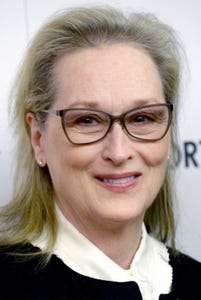
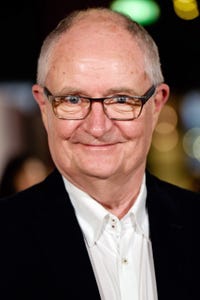
SummaryThe Iron Lady is a surprising and intimate portrait of Margaret Thatcher, the first and only female Prime Minister of The United Kingdom. One of the 20th century’s most famous and influential women, Thatcher came from nowhere to smash through barriers of gender and class to be heard in a male dominated world. (The Weinstein Company)
SummaryThe Iron Lady is a surprising and intimate portrait of Margaret Thatcher, the first and only female Prime Minister of The United Kingdom. One of the 20th century’s most famous and influential women, Thatcher came from nowhere to smash through barriers of gender and class to be heard in a male dominated world. (The Weinstein Company)
The best female leading performance I ever saw! Meryl Streep is simply fantastic as Margaret Thatcher and she deserves the Oscar for this. The film has got several problems, but Streep saves it.
Stirring portrayal of the controversial former Prime Minister of England. Excellent acting by the whole cast, especially Meryl Streep and Alexandra Roach. This movie does not flinch from showing every phase of Thatcher's life. From her early years living through World War II, to her difficult attempts to enter politics; to her love for her husband and then the main career years we all know, you get much more than in your average biographical film. Wonder of wonders, they allow the character to grow older and show all of her issues with declining health. Every one of the ups and downs of her terms in office is shown with brutal clarity. We see everything from the wild early years of success, as the stock market went up to crazy heights, and then the thunder as it all came crashing down. Riots, the poll tax, none of it is swept under the rug. They also show her personal character- from stubbornness to a hidden and surprising grace and hope. Although I disagreed with a number of her political decisions, in this movie I was shown that there was more to her than meets the eye. A lot more. One of the most powerful movies I've seen in a long time.
The Iron Lady never delves deeply enough into the politics or the people, preferring instead to make us feel bad about the unfortunate way in which old age levels us all.
Despite the story's conceit of placing the viewer inside Thatcher's head, she never feels like a real person - but this is more the fault of Morgan's script than Streep's typically studied performance, much of it buried under prosthetics.
Strangely, this Thatcher biopic might have been far more worthwhile if it wasn't about Thatcher: The aged, dotty stranger hanging out with her dead husband is a more compelling subject.
Speaking as someone who despises almost every aspect of the Thatcherite social-economic consensus that has defined the capitalist world for thirty years (and almost every aspect of Thatcher's actual policies), she deserves more than this.
Much like the woman it depicts, The Iron Lady is an incredibly divisive film. Its detractors decry its portrayal of Margaret Thatcher's dementia, the inaccuracies, the clear liberal messaging about women in power, and how it ignores the nitty gritty of her career as Prime Minister in favor of that focus on dementia. Those in favor champion the acting of Meryl Streep, the stirring portrayal of a woman who broke barriers to become the first female Prime Minister, and the film's script that eschews typical genre cliches in favor of an intimate look at the former Prime Minister. By the end of the film, as with her time as Prime Minister, it becomes clear that the truth is somewhat in the middle. The Iron Lady has its missteps. It has its triumphs. Yet, at the end of the day, it paints a clearer picture of the woman behind the actions she took instead of just portraying the actions she took, which is a noble and unusual approach to this type of biopic.
In criticizing The Iron Lady, some critics argued that the film was too down the middle. For such a divisive figure, it never seemed to pick a side. Is she a hero or is she a cruel wench? Depicting both sides in equal measure, this may honestly be the film's greatest accomplishment. In portraying her dementia with great emotional resonance and authentically showing how she copes with the death of husband Denis (Jim Broadbent), The Iron Lady immediately makes Margaret Thatcher (Meryl Streep) a sympathetic figure. Watching her hallucinate that Denis is there before realizing she must give him away and stop living in the past is honestly hard to watch. It rips your heart out and reminds me of my own grandmother and her crippling depression after the death of my grandfather in April 2014. Since his death, she has never been the same and has continued to wither away due to falls and Parkinson's. Margaret Thatcher's struggles to cope with the death of her husband especially hit home for that reason, as well as her struggles with dementia. Though a bit crude in including this in the final picture, it does add a lot of emotional depth to the film and shows a period of time that the public never really got to see.
Yet, while the film shows this sympathy, it simultaneously shows her brutality. Shutting down dissenting opinion, carrying herself with a pompous attitude, and doing nothing for the poor beside telling them to get a job, The Iron Lady does not shy away from showing Thatcher's rough edges. While her unprivileged background and struggle to become the first female Prime Minister against even her own conceptions about the British people, all paint a positive picture. However, her cold and cruel treatment of those around her and how she openly neglects her family in favor of her own ambitions, show that there is not an entirely good person underneath her hard exterior. She is not as innocent as she likes to pretend. Yet, she is not as evil as her detractors like to believe. In essence, she is an average person. There is good and there is bad. It is impossible to make a sweeping decision about her status as good or bad in a film or in life itself if they never commit some horrible atrocity. There is always two sides to the coin and The Iron Lady's smart script finds this balance.
Yet, the storytelling leaves a lot to be desired. Relying upon a good performance from Streep to really carry the film, The Iron Lady falters throughout. Though the portrayal of a dementia-ridden Thatcher is compelling, it never reaches the heights of its depictions of her career. These moments can often thrill and provide great dramatic tension, but arise in odd spots. The scenes are scattered throughout the film and shown as Thatcher remembering something that happened years ago. Shown in chronological order, the scenes either do not flow well with the rest of the picture or simply cut too soon. The worst offender here is when the Grand Hotel is bombed. Showing the bombing and then Margaret and Denis reuniting, we never see her speech to the public, which had been heavily praised by a female helper years later as the source of her feminine strength. Naturally, as everything in the film is balanced out, scenes of the conflict in the Falkland Islands and the decision to fight back is excellent. Showing Thatcher's backbone and strength as a leader to take steps she deems absolutely necessary, The Iron Lady paints a compelling picture of Thatcher as a strong leader. Whether or not one agrees with her politics, it is hard to deny she had great conviction in her decisions and stances.
Meryl Streep gives one of the finest performances of her career, one that will go down as one of the best renditions brought to cinema, unfortunately the film that comes along with her is simply a below par effort of idolising a very controversial figure of British politics.
The premise of the story was well thought out, we start with a very old Lady Thatcher struggling with her dementia, unable to realise that her husband, Dennis (Jim Broadbent) who she is talking to, is actually dead, showing the severity of her memory loss. She begins reminiscing about her time as a young up and coming politician, showing a biased view of her rise to power, she is portrayed as being one of the only women within Parliament at this time which is in fact untrue, as there were at least 20 others.
We see the eventual woman we remember today, the Prime Minister of Britain, coining the infamous 'Iron Lady' nickname.
However, the film takes a very dramatic stance on emphasising Thatcher's rise to power, we are always made to feel sorry for someone who was by all means a warmonger, this isn't by any means sour **** as we don't know the woman behind the power, but her defining policies outlined in this film are created to almost make us feel guilty for her, remorse is something this film attempts to receive too often.
It simply isn't gritty and true to life, the moments of Thatchers defiance are almost pantomime-like, bringing little seriousness to the issues that she is dealing with, and over-compensating with an epic score that feels very out of place.
Meryl Streep, however, is completely majestic as Thatcher, perfecting her high-pitched yet civilised accent down to a tee, and capitalising on her moments of humiliating her Cabinet staff, it can be said that Thatchers deteriorating moments and failure to distinguish between past and present are brought emotionally to life by Streep, who is as simply hit the unique persona of the former PM head on. It is just unfortunate that her performance completely shadows this very mediocre and timid attempt at painting the life of one of the most controversial political figures of the modern era.
Without Streep, this film simply would have been nothing, but her commanding performance deserves enough recognition and praise to watch this, but unfortunately this is an idolising film that only touches on a feministic rise against the odds, rather than a true picture of the error and strain of this much publicised politician.
2019 just watched. Total waste of time and stopped watching midway. 9 stars for the cinematography, but 3 stars for everything else. Focuses way too much on Thatchers failing character in her later life due to dementia. The back and forth between reality, history and madness is disturbing isolated vignettes. Streep loves to get dressed up in fifty different dresses. Its also bordering on criminal that this was produced 3 years before she passed away. Pathetic defamation **** conservative leader. It shows the progressive's inclination to showcase abnormalty which is what Hollywood and the old english movie makers used to avoid. Nothing is sacred.
I actually sat through this movie several times mainly because I was so taken aback by how much I loathed it the first time that I watched it again to try and understand why. On the second viewing, I actually liked it better and this is mainly due to the performances of the younger Margaret and Denis. I directly blame the director and screenwriter for this train wreck of a movie.